
Best Frenemies: The Impact of Artificial Intelligence on the Creative Services Industry

Artificial intelligence

Sign Up for a FREE Open Enrollment Toolkit

By submitting your email address, you agree to receive periodic communications from Communication Partners, Inc. We will never share your information with third parties or social marketing firms.

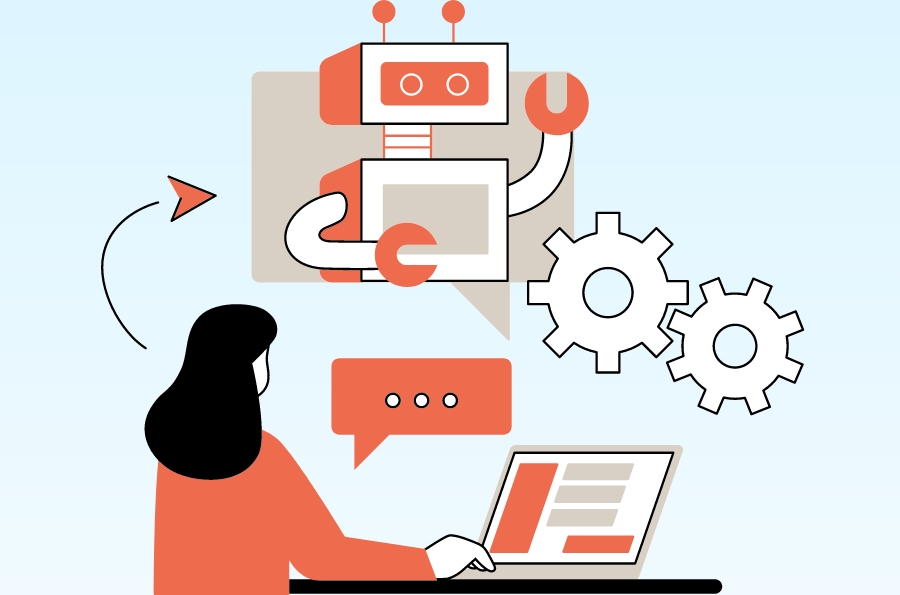
Artificial intelligence (AI) is revolutionizing the way we work. Its impact on the creative services industry has sparked both excitement and apprehension for content creation companies, like CPI. Used effectively, AI can streamline processes, improve efficiency, and enhance creative output. However, like any technology, there are important factors to consider.

At CPI we are evaluating the pros and cons of incorporating artificial intelligence into employee benefits deliverables. We asked our Content Director, Suzi Ffrench, and Art Director, Daniel Hardison, to provide their perspective on how to harness the power of AI without compromising the qualities that make human-created content and design unique and meaningful.

Unlocking the Potential

We’ve all heard the doom and gloom forecasts surrounding the impact of AI on nearly every industry. Yet, in our research, we’ve also discovered opportunities to harness the power of AI for creative services companies:

  • Increased productivity: AI can automate repetitive and time-consuming tasks such as data analysis, research, basic design layouts, and content generation. This allows writers and designers to focus on high-level creative work, resulting in increased productivity and efficiency. Hardison explains, “Inevitably, AI will find its place in our workflow. It’s our responsibility to learn these tools and incorporate them correctly and ethically. Every one of the programs we use is going to have some AI component. So, for me, that’s a workflow advantage. I can do things quicker. I mean, without AI, it would take me quite a while to create 20 different color palettes. It’s an added feature.”
  • Content recommendations: AI algorithms can analyze user data and preferences to provide personalized content recommendations. For CPI, this could mean delivering hyper-targeted content to our audiences, leading to higher engagement and satisfaction.
  • Enhanced creativity: AI can serve as a powerful tool for creative inspiration. By analyzing vast amounts of data, it can identify patterns and generate new ideas or concepts that can spark creativity. This is where Ffrench sees the potential for the most positive impact, stating, “AI could help us overcome writer’s block. It could provide discussion points, concepts, or taglines that our team can refine and customize to achieve the desired outcome.”
  • Cost savings: By automating certain tasks and processes, AI can reduce operational costs. Ultimately, this cost reduction can be passed on to our clients.

Navigating the Challenges

It’s important to acknowledge the challenges that exist when we integrate AI into the creative process:

  • Lack of human touch: While AI can automate and optimize various aspects of content creation, there is a risk of losing the emotional depth and personal connection that resonates with audiences. Content purely generated by AI algorithms may feel impersonal or robotic, potentially diminishing the overall user experience. Ffrench expresses her primary concern, “When AI compiles data based on common prompts, it’s using content from previously written materials. There’s nothing truly innovative. If people no longer share fresh perspectives and innovative concepts, AI will consist solely of recycled material—which, over time, will become stale and lose its relevance.”
  • Ethical concerns: AI algorithms are trained on vast amounts of data, and if the data is biased or flawed, it can result in biased content generation. For CPI, this means that anything generated by AI would never be considered final. Instead, time would be spent fact checking and revising, to preserve our commitment to accuracy, with the potential of diminishing any time initially gained.
  • Creativity limitations: Although AI can assist in generating ideas and content, it may struggle with truly creative and abstract tasks that require human intuition, imagination, and context. AI algorithms are limited by the training data and inability to reach the same level of creativity as human content creators. Ffrench says, “Benefits guides, for example, are highly tailored to each client, and our clients’ benefit packages vary significantly. AI cannot write that intuitively yet. I don’t believe AI is to the point where it can tie parts of a guide together.” That tying together, whether within a document or between different parts of a campaign, is what makes CPI’s deliverables so impactful. Delivering a customized message for each unique client, to a diverse group of individuals, and about a wide variety of benefits is a skill AI has not yet mastered.
  • Overreliance on AI: Overreliance on AI can lead to complacency among content creators. Relying too heavily on AI algorithms for design generation and content may discourage critical thinking and human decision-making, potentially resulting in a decline in originality and quality. Says Hardison, “There’s this assumption from people that it’s going to solve their problems. It’s not. We still have to have an idea of what we’re doing and know how to execute it. There’s going to be all this artwork out there that’s AI generated and it’s good, but I think what we’ve seen is it’s not all there yet. The threat is more about people thinking they can use AI and not have to use a professional. But it’s going to become obvious pretty quickly that’s not the case.”
  • Potential job displacement: The automation potential of AI may lead to concerns about job displacement within the creative services industry. While AI can augment human capabilities, there is a possibility that certain roles or tasks may become obsolete, requiring reskilling or redeployment of human resources. Both Ffrench and Hardison agree there’s a feeling that those who replace jobs with AI value profit over people, as well as quality, a sentiment which goes against CPI’s core values.

The Takeaway

At CPI, our goal is to strike a balance between AI and human creativity, leveraging the benefits of AI while maintaining the unique value and authenticity that our creators bring to the table. By embracing the collaborative potential of AI and human creativity, we will navigate this new technology with confidence and purpose, while continuing to deliver exceptional and personalized content to our clients.

On that note, and in keeping with the article’s theme, it should be noted that portions of this piece were written with the help of ChatGPT—then edited and improved upon by an actual human.

Your Journey Starts Here

Contact our award-winning experts.

Creativity in Motion

View our product videos.

Our Product Offerings

Download the possibilities.

Congratulations!

Click the button below to view and download your FREE Enrollment Toolkit.

2023 Net Promoter Score

What Does This Mean?

Providing the highest level of hospitality is important to us. Surveys give us the feedback we need to continually meet this goal. We’re pretty proud of our Net Promoter Score (NPS). Here’s why:

What Is NPS?

NPS is based on the percentage of survey respondents who are promoters, passives, and detractors:

  • Promoter: Score of 9 or 10
  • Passive: Score of 7 or 8
  • Detractor: Score of 0 to 6

Scores range from -100 to 100. The higher the score, the higher the percentage of promoters versus detractors.

What Is a Good NPS?*

Above 0: Good
Above 20: Favorable
Above 50: Excellent
Above 80: World Class

*Bain & Company, creators of NPS