
Open Enrollment may be the most visible moment in your benefits calendar, but it shouldn’t carry the full weight of benefits communication.
When all your communication is concentrated into a short window, employees are stuck trying to do a lot of things at once: review complex information, make important decisions, and meet the deadline. That kind of pressure only leads to rushed decisions that employees may regret later.
A year-round approach is much more effective. It gives employees time to absorb information and see how their benefits fit into their daily lives. By the time Open Enrollment rolls around, they’re ready to make informed decisions instead of scrambling to figure things out.
A strong year-round benefits communication plan doesn’t mean constant emails and notifications, but it does mean creating strategic touchpoints.
Mapping key milestones, deadlines, and seasonal reminders in advance reduces last-minute scrambles. It also helps you and your team keep messaging consistent and creative, without having to start from scratch each time.
Benefits communication makes more sense when it’s tied to what employees are already experiencing throughout the year, for example:
When communication aligns with life events, employees are more likely to pay attention and act.
Benefits are part of total compensation, but the value isn’t always obvious.
Ongoing communication helps to connect the dots. It reminds employees what’s available and when to use it. With regular communication and education, employees better understand the value of the investment you’re making in them and will be more likely to engage with their benefits going forward.
Email alone is not enough. A more effective approach is to layer messaging across your intranet, manager conversations, digital signage, and home mailers to increase visibility with partners and dependents who may be involved in decision-making. Wherever your people are, that’s where you need to be.
Your year-round benefits communication plan should evolve as you learn more about what employees respond to and which benefits they use and value most. With these insights, you can refine future communications for even greater employee engagement over time.
When benefits communication happens throughout the year, Open Enrollment becomes much easier for everyone. Employees understand their options and know where to go for help. They also have a clearer sense of how their benefits meet their needs. The result is smoother enrollment, fewer last-minute questions, and more well-informed selections.
If you’re ready to build a benefits communication strategy that works all year long, CPI is here to help. Email us at hello@commpart.com.
Contact our award-winning experts.
View our product videos.
Download the possibilities.
By submitting your email address, you agree to receive periodic communications from Communication Partners, Inc. We will never share your information with third parties or social marketing firms.
We use cookies to improve your experience on our site. By using our site, you consent to cookies.
Manage your cookie preferences below:
Essential cookies enable basic functions and are necessary for the proper function of the website.
You can find more information in our Privacy Policy and .
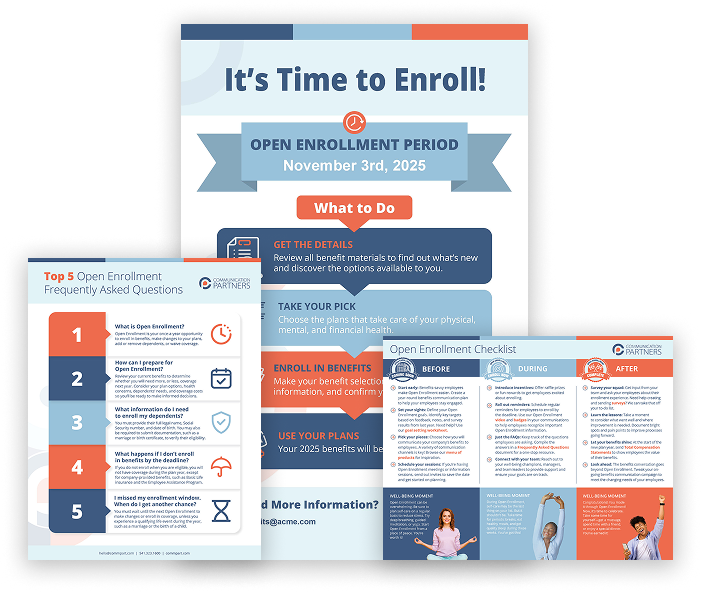
Click the button below to view and download your FREE Enrollment Toolkit.
Providing the highest level of hospitality is important to us. Surveys give us the feedback we need to continually meet this goal. We’re pretty proud of our Net Promoter Score (NPS). Here’s why:
NPS is based on the percentage of survey respondents who are promoters, passives, and detractors:
Scores range from -100 to 100. The higher the score, the higher the percentage of promoters versus detractors.
| Above 0: Good |
| Above 20: Favorable |
| Above 50: Excellent |
| Above 80: World Class |
*Bain & Company, creators of NPS