
Let’s start with the obvious: Mental health matters.
Giving employees the tools is important, but getting employees to use them is the real superpower. That’s why it’s so important that we make mental health resources not just available, but visible, understandable, and accessible.
There are more mental health programs than ever (EAPs, mindfulness apps, virtual therapy, crisis lines) but simply offering more resources doesn’t mean people will use them.
The fix might not be a longer list of benefits, but a shift in how we talk about them. Clinical descriptions and unfamiliar program names can leave employees silently asking:
Everyone struggles sometimes, whether it’s stress, burnout, substance use, or a crisis. When we use plain language and an inclusive tone, we make space for people to feel seen.
It’s important to say it: “Help is here when you need it.”
Instead of starting with the resource (“Try our new Calm app!”), start with the reason (“Trouble sleeping? Use our new Calm app.”). When we acknowledge specific challenges and offer clear, relevant solutions, people are more likely to act. Consider these six messaging approaches:
Feeling stretched thin? Constant “blah” mood? A meditation app might be an ideal start. Or maybe it’s time to talk to someone using the EAP. Normalize trying both.
Worried about finding eldercare? Struggling to pay bills? Trying to balance three kids and remote work? Stress doesn’t exist in a vacuum. Resources like your EAP or FindHelp.org connect employees with real-world support including childcare, financial help, legal guidance, and more.
Chronic pain, diabetes, or infertility can weigh heavily on mental health. Promote programs like musculoskeletal support, diabetes coaching, or fertility services. Getting physical symptoms under control is often an initial step toward feeling better mentally.
Talking about substance use can be hard. This is why it’s so important to address it with compassion, not judgment. Whether it’s alcohol, medication, or another substance, make sure employees know what confidential help is available and that they won’t face retaliation for seeking it.
For anxiety, depression, or anything beyond the occasional off day, counseling is key. Your EAP may offer a number of free sessions and medical plans may cover therapy beyond that. For more complex or lingering symptoms, highlight plans that offer virtual psychiatry with prescription support.
Sometimes help needs to be available immediately. Ensure crisis hotlines (national, veteran-specific, LGBTQ+, etc.) are front and center, not buried at the bottom of a page. If you have internal reporting or safety protocols, explain them clearly. And be sure to emphasize, “You’re not alone, and there is help right now.”
When it comes to mental health, clarity beats comprehensiveness. Every communication should answer:
When someone’s struggling, they don’t want to guess. They want a clear sign that points them in the right direction.
When it’s buried in a guide or a page on a benefits site, mental health support often gets overlooked. A great way to showcase that you truly value mental health is to carve out space for it. Create a dedicated spotlight: a themed newsletter, a fold-out postcard, a mini email series, or even just a one-page flyer that features a single offering you want people to know about and use. A clear, concise highlight lands the message and shows you care.
Mental health communication is about helping people navigate some of the most personal, vulnerable parts of their lives. The right words can make all the difference. When you talk about mental health resources, lead with empathy and speak to real-life situations. Offer next steps and make the resources feel personal, practical, and accessible.
Never underestimate the power of saying, “You’re not alone.” Sometimes the most valuable benefit we can offer is helping someone figure out where to begin.
Contact our award-winning experts.
View our product videos.
Download the possibilities.
By submitting your email address, you agree to receive periodic communications from Communication Partners, Inc. We will never share your information with third parties or social marketing firms.
We use cookies to improve your experience on our site. By using our site, you consent to cookies.
Manage your cookie preferences below:
Essential cookies enable basic functions and are necessary for the proper function of the website.
You can find more information in our Privacy Policy and .
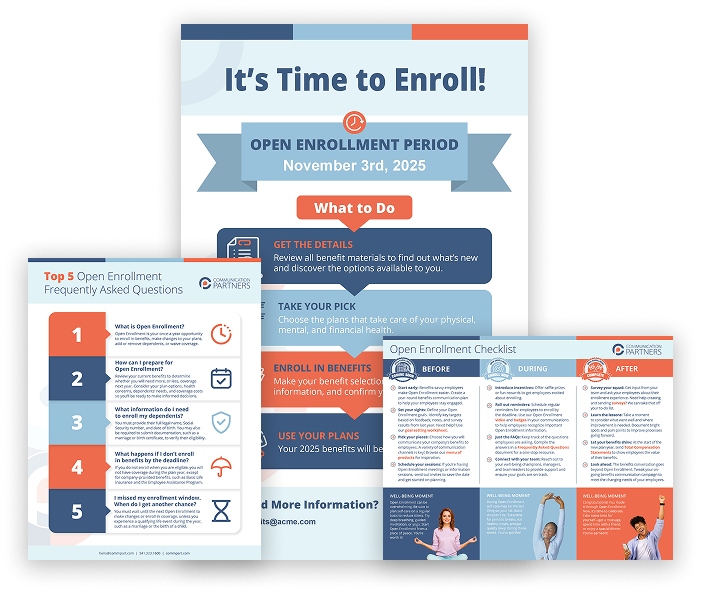
Click the button below to view and download your FREE Enrollment Toolkit.
Providing the highest level of hospitality is important to us. Surveys give us the feedback we need to continually meet this goal. We’re pretty proud of our Net Promoter Score (NPS). Here’s why:
NPS is based on the percentage of survey respondents who are promoters, passives, and detractors:
Scores range from -100 to 100. The higher the score, the higher the percentage of promoters versus detractors.
| Above 0: Good |
| Above 20: Favorable |
| Above 50: Excellent |
| Above 80: World Class |
*Bain & Company, creators of NPS